A True Yunatic
Some minds do not simply imagine connection.
They build the conditions for it.
Tim Berners-Lee is one of the defining figures of the digital age: the inventor of the World Wide Web, created while working at CERN in 1989. His idea began as a way to help information flow more freely between researchers, but it grew into something far larger: a shared space where people, knowledge and ideas could connect across the world.
His work reminds us that the most powerful innovations are not always the loudest. Sometimes they are open, simple and generous enough for others to build upon.
“This is for everyone.”
The Inner Child
The inner child we associate with Berners-Lee is a bridge-builder.
Curious about systems.
Fascinated by links.
Drawn to the invisible threads between people, ideas and knowledge.
It does not ask only what a machine can do.
It asks what a network can make possible.
That spirit of curiosity helped shape one of the most transformative ideas of our time: a web of connected information, open enough to grow beyond its original context.
Tribbles
Berners-Lee’s tribbles are quiet revolutions in connection.
The World Wide Web
Invented at CERN in 1989 as a global information system built around linked documents and open access.
HTTP, HTML and URLs
Foundational tools that made it possible to publish, find and connect information across the web.
Open Standards
A commitment to keeping the web interoperable, accessible and able to evolve through collective stewardship.
World Wide Web Consortium
The organisation he founded to help guide the development of web standards.
Solid Project
A continuing effort to rethink data ownership and give people more control over their digital identity and information.
Connection as care
Perhaps his deepest tribble: the belief that technology should serve people, knowledge and collaboration.
CERN
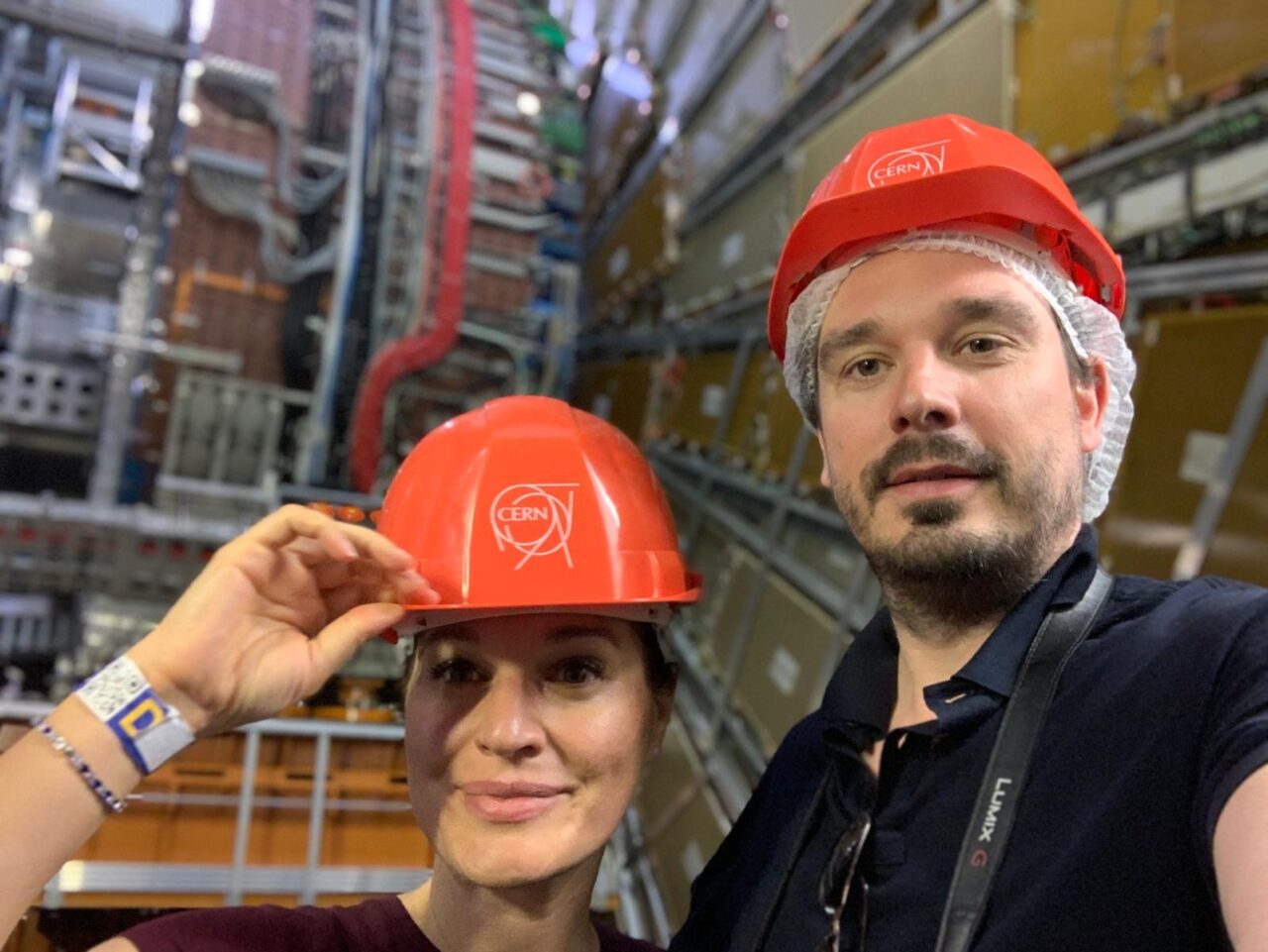
Did YU know?
On September 15, 2019, Koen and Véronique visited CERN – the research centre where Tim Berners-Lee first developed the World Wide Web.
Maybe they picked up a few extra particles of cosmic inspiration there.
NOW YU know!
Connected with the Yuniverse
Berners-Lee’s connection to the Yuniverse lies in openness.
He shows that technology is never only technical. It shapes how people learn, collaborate, communicate and trust. A digital structure, like an architectural one, can either close the world down or open it up.
For Yugening, this resonates deeply.
Architecture also creates networks: between people and place, between knowledge and material, between private life and shared experience.
A good system does not dominate.
It enables.
It connects.
It gives others room to grow.
Spiritual
There is something quietly spiritual in building something for everyone.
Not spiritual as mysticism.
Spiritual as generosity.
The generosity of open knowledge.
The responsibility of shared systems.
The belief that connection can become a form of care.
Tim Berners-Lee reminds us that the greatest ideas are not always the ones we keep.
Sometimes they become powerful because we allow others to use them, shape them and carry them forward.